
In the summer of 1928, a young Black man from Colorado set out on one of the most extraordinary journeys in American sports history.

His name was Kelley Dolphus Stroud, and when racism robbed him of the promised bus ticket to the Olympic trials, he simply refused to let his dream die.
With ten dollars in his pocket, a golf club for a walking stick, and a hand-painted sign that read “Denver to Olympia,” Kelley Dolphus Stroud walked 1,765 miles alone across a segregated nation to reach Boston.
Born of Creek Nation heritage in what is now Oklahoma, Stroud had grown up facing hardship long before this journey.
Yet by the late 1920s, he had become a phenomenon in Colorado Springs: a star student and athlete who seemed destined for greatness.
At Colorado College, he earned the prestigious Perkins Scholarship (awarded only to the man and woman with the highest grade-point averages) after his sophomore year.
Three years later, in 1931, he would graduate cum laude and become the first African American Phi Beta Kappa in the college’s history.
But it was on the track and in the mountains where Stroud truly dazzled.
On March 5, 1928, he shattered a 25-year-old record by running up and down Pikes Peak in just three hours and ten minutes.
A few months later, in June, he dominated the 5,000-meter run at the regional Olympic trials in Denver.
The prize for the winner was supposed to be simple and clear: paid transportation and expenses to the national Olympic trials in Boston, the final stepping-stone to the 1928 Amsterdam Games.
When officials informed Stroud that the offer no longer applied to him, both he and his white coach, L.M. Hunt, knew exactly why. It wasn’t about money or logistics; it was about the color of his skin.
Read More-: He Traveled That Ball All the Way From Africa’: Racist Taunt at Wayne County Middle School Basketball Game
Most people would have walked away, but Stroud walked toward Boston instead.
At 4 a.m. one morning in late June, he left Denver with his backpack, a canteen of water, that golf club for protection against stray dogs or worse, and the cardboard sign hanging around his neck.
The early miles were brutal. He later recalled stretches of 20 miles without seeing a single car.
America in 1928 was not kind to a Black man walking alone through small towns and lonely highways.
Food was scarce, money ran out fast, and exhaustion became his constant companion.
Yet word began to spread. A story in the Chicago Daily News caught the nation’s attention, and suddenly, motorists were pulling over to offer rides, food, or a few dollars.
People who had never met him started rooting for the young man trying to outrun bigotry itself.
After weeks on the road (walking, jogging, and hitchhiking whenever he could), Stroud stumbled into Boston. He had made it, but only just.
He arrived at Harvard Stadium a mere six hours before his race was scheduled to begin. Malnourished, dehydrated, and beyond physical exhaustion, he lined up anyway.
Six laps in, his body gave out. He collapsed on the track, unable to finish.
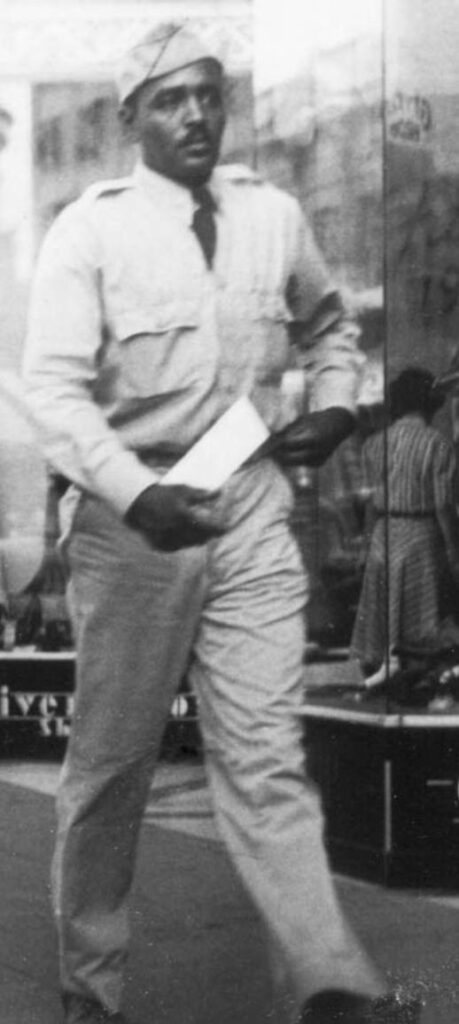
The Olympic dream that had carried him 1,765 miles ended not with a medal, but with strangers helping him off the cinder oval.
The disappointment was crushing, but it never defined him.
Stroud returned to Colorado, finished his degree with honors, and went on to teach school in Georgia and Texas before settling in Portland, Oregon.
There, he built a successful moving and storage company and, in a quiet act of giving back, founded a golf tournament that opened doors for others.
He passed away in 1975 while visiting Washington, D.C., leaving behind a legacy far greater than any Olympic trial.
Kelley Dolphus Stroud never got the chance to run under the Olympic rings, but nearly a century later his story still does: a testament to what happens when talent, intellect, and sheer will confront a society that says “no.”
He didn’t break the system that day in 1928, but he refused to let it break him. And sometimes, that is the greater victory.

