
Billy Mills’ legendary journey is one of the most inspiring tales in sports history, a rags-to-riches saga that transcends the track and touches on resilience, cultural pride, and the power of dreams.
Born William Mervin Mills on June 30, 1938, in Pine Ridge, South Dakota, Billy grew up on the Pine Ridge Indian Reservation, home to the Oglala Lakota people.
Life dealt him crushing blows early; he lost his mother at age eight and his father at twelve, leaving him orphaned amid poverty and hardship.
Yet, in those final moments with his father, Billy received a gift that would change everything. His dad told him,
“It takes a dream to heal a broken soul… If you follow something, you will someday have wings of an eagle.”
Those words became his anchor, a quiet promise that carried him through grief and doubt.
To channel his energy and escape the pain, Billy turned to sports. He attended the Haskell Institute in Lawrence, Kansas, where he discovered his talent for running.
He won the 1956 Kansas High School Activities Association Class B state championship in cross country and even boxed for a time before giving it up to focus fully on distance running.
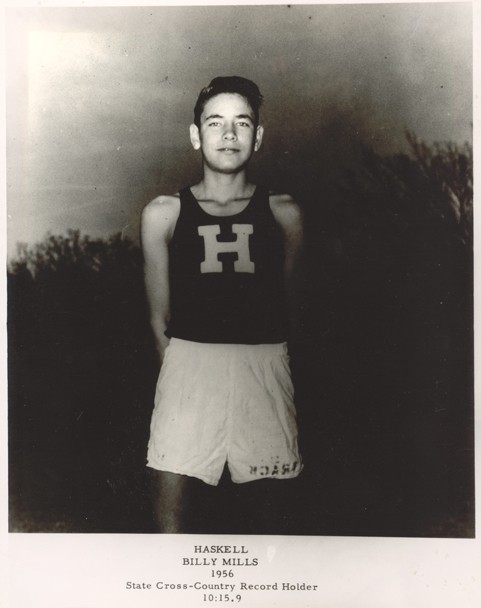
His ability caught the eye of scouts, earning him an athletic scholarship to the University of Kansas.
There, he thrived as a three-time NCAA All-American in cross country, claimed the Big Eight Conference cross country title, and won the outdoor national championships in 1959 and 1960. He graduated in 1962 with a degree in physical education.
After college, Billy joined the United States Marine Corps, where he served as a first lieutenant in the reserves.
The Marines provided structure and a place to train seriously, and by 1964, he qualified for the U.S. Olympic team in both the 10,000 meters and the marathon, despite facing significant hurdles along the way.
As a Type 2 diabetic dealing with blood sugar fluctuations, he battled physical limitations and deep self-doubt.
There were moments he nearly quit, including dark periods of depression. But that childhood dream refused to fade.
Few gave him a chance heading into the 1964 Tokyo Olympics
The 10,000-meter race was dominated by Europeans and Africans, with Australia’s Ron Clarke, the world record holder, leading the favorites.
Billy was a virtual unknown, his personal best nearly a minute slower than Clarke’s, and he had even faced bureaucratic issues and racism that nearly derailed his path.
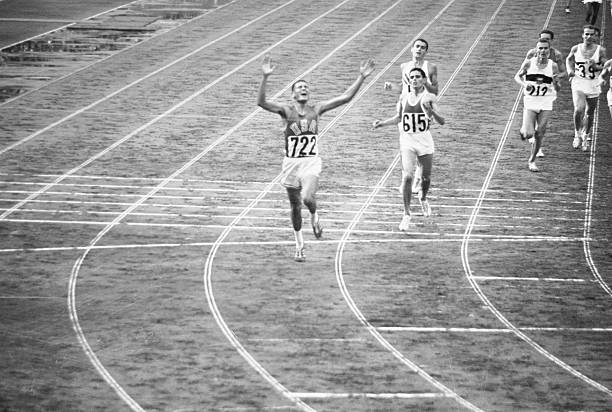
Yet on October 14, 1964, under cool, overcast skies, the 25-lap race unfolded dramatically. Clarke surged every other lap, whittling the field down.
With just a lap to go, Tunisia’s Mohamed Gammoudi broke clear, Clarke chased, and Billy seemed too far back.
Then came the moment that still gives fans chills. Spotting an eagle emblem on a rival’s shirt, echoing his father’s words about eagle wings, Billy surged.
Pumping his arms and lifting his knees, he exploded down the final straight in lane 4, overtaking both Clarke and Gammoudi in the last frantic seconds.
He crossed the line first in 28:24.4—an Olympic record, nearly 50 seconds faster than his previous best. NBC commentator Dick Bank erupted with the now-famous cry, “Look at Mills! Look at Mills!”
The upset stunned the world. Billy Mills became the first American to win the Olympic 10,000 meters, the first non-European, and the only winner from the Americas.
The victory wasn’t just athletic; it was deeply personal and cultural.
Standing on the podium, Billy fought back tears, not only from joy, but from the weight of feeling unseen as a Native American athlete who had overcome so much.
His triumph remains one of the greatest upsets in Olympic history.
In the years that followed, Billy didn’t rest on his laurels. He set U.S. records in the 10,000 meters and three-mile run, with a 5,000-meter best of 13:41.4.
He continued his service, spoke at events, and inspired others. His story inspired the 1983 film Running Brave, where Robby Benson portrayed him.
He co-authored books like Wokini: A Lakota Journey to Happiness and Self-Understanding with Nicholas Sparks and Lessons of a Lakota.
He appeared in media, including an On Being podcast episode on running as a spiritual practice.
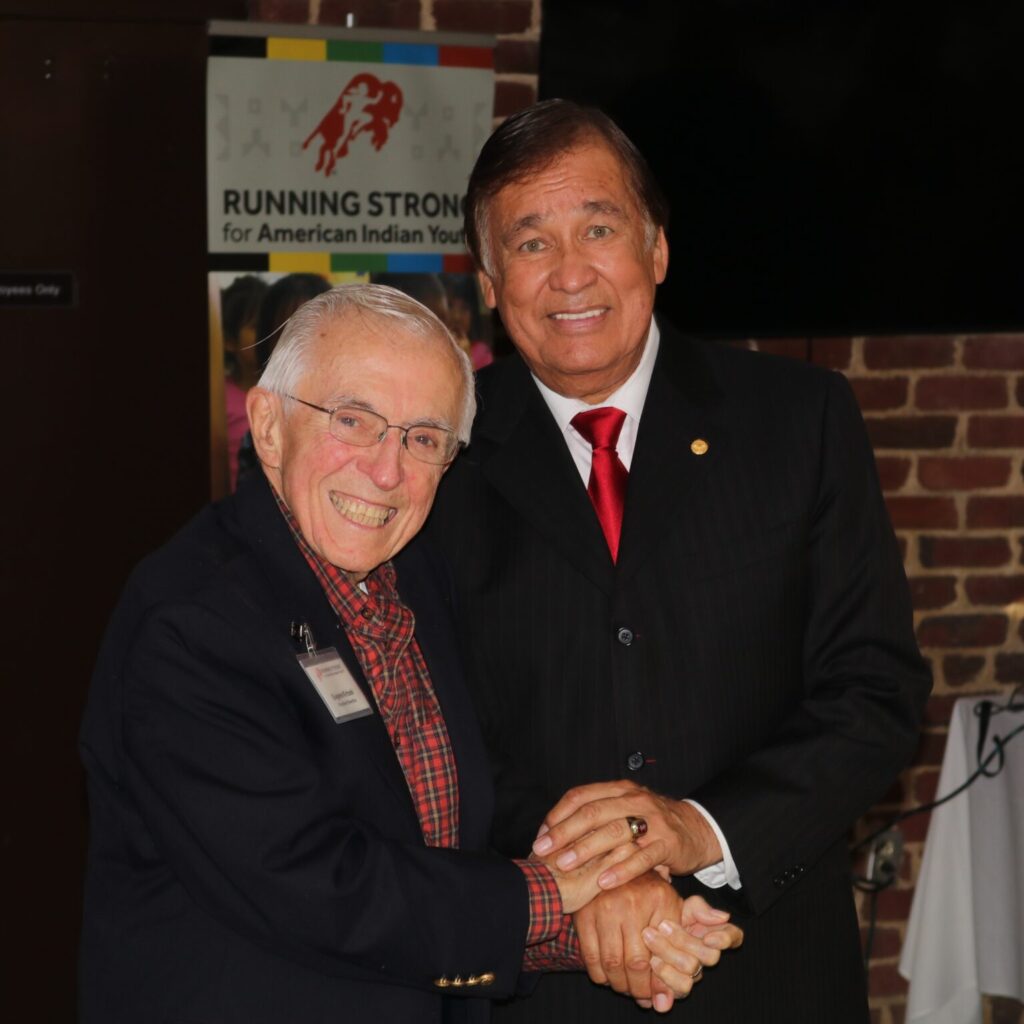
True to the Lakota tradition of the “giveaway,” Billy co-founded Running Strong for American Indian Youth in 1986 with Eugene Krizek.
As national spokesperson, he has helped the nonprofit provide food, water, shelter, health programs, education, and self-sufficiency initiatives to Native communities, especially on Pine Ridge, raising millions and empowering youth to dream big and lead with pride.
Decades later, Billy’s legacy endures. He received the Presidential Citizens Medal from President Obama in 2012, induction into the U.S. Olympic Hall of Fame, honorary doctorates, and countless honors.
Now in his late 80s, he remains a motivational speaker and advocate, reminding everyone that a dream can heal broken souls and give anyone wings to soar.
From the dusty roads of Pine Ridge to the Olympic podium in Tokyo, Billy Mills’ legendary journey proves that true greatness isn’t about where you start, it’s about the courage to keep running toward something bigger than yourself.
Also Read-: Todd’s $175 Sports Insurance in Texas Saves $2,500 Baseball Season After Player Injures Wrist

