
Navigating youth sports can be a tricky balance between supporting your child and allowing them to grow independently.
One common dilemma many parents face is whether to talk to a coach about their child’s playing time.
While it comes from a place of care, approaching this topic can either benefit or hinder the athlete, depending on how it’s handled.
There are times when a parent’s involvement can be constructive.
Coaches appreciate engaged parents, especially when the conversation is respectful, realistic, and focuses on improvement rather than entitlement.
For example, Mike Minton, a youth basketball coach, shared that he prefers parents who care and communicate appropriately over those who don’t.
The key is timing and approach. Speaking to a coach immediately after a game is rarely productive.
Emotions run high, and conversations can escalate unnecessarily.
A 24-hour “cooling-off” period allows both parent and coach to discuss matters calmly, increasing the likelihood of a positive outcome.
In some situations, if a player is too young or unsure how to approach a coach, parents can guide the conversation by offering advice on how to communicate effectively.
This can build confidence in the athlete while also giving the coach context from a parent’s perspective.
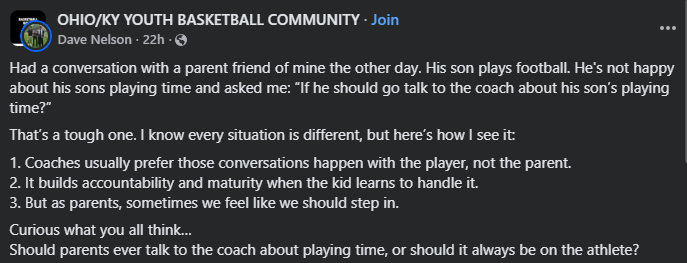
Even well-intentioned interventions can backfire. Most coaches prefer that players initiate discussions about playing time themselves.
When a parent jumps in too quickly, it can undermine the athlete’s responsibility and prevent them from developing critical skills like accountability, resilience, and communication.
Drew Mojzer, an experienced voice in youth sports, emphasizes that by the freshman year of high school, athletes should start handling such discussions themselves.
Parents can coach behind the scenes, offering guidance and strategies, but the player should be the one to directly engage with the coach.
Additionally, approaching the coach with unrealistic expectations or in a confrontational manner can damage relationships and even hurt a player’s standing on the team.
It can send a message that success comes through advocacy rather than hard work, which can be detrimental in the long run.
Instead of demanding answers from coaches, parents should focus on helping their child understand what it takes to earn more playing time.
Aaron Barker, another parent in the youth sports community, advises asking athletes: “What are you doing to earn playing time?” This encourages self-reflection and accountability.
Parents can also help athletes:
- Prepare questions or talking points for their meeting with the coach.
- Focus on specific skills or behaviors they want to improve.
- Understand the team’s goals and the coach’s perspective.
By framing the conversation as a learning opportunity rather than a complaint, parents foster growth, resilience, and a sense of ownership in their athletes.
Parents play a critical role in the development of young athletes, but knowing when to step in matters.
Conversations with coaches about playing time can be helpful when approached respectfully and with proper timing.
However, stepping in too soon or speaking on behalf of the child can hinder their growth, independence, and understanding of accountability.
Ultimately, the most effective strategy is to equip athletes with the tools and confidence to advocate for themselves while providing supportive guidance behind the scenes.
This approach not only helps the child navigate sports but also prepares them for challenges both on and off the field.

