
A gang member who murdered a promising Los Angeles high school football star because he assumed the teen’s red Spider-Man backpack linked him to a rival gang received a death sentence.
Superior Court Judge Ronald H. Rose sentenced Pedro Espinoza to death and ordered his transfer to San Quentin State Prison, rejecting defense claims that the 23-year-old did not receive a fair trial.
“The evidence is clear he decided to murder the victim in cold blood and bragged about the killing after,” Judge Rose said.
“The defendant executed the victim as he lay on the ground defenseless.”
ESPN
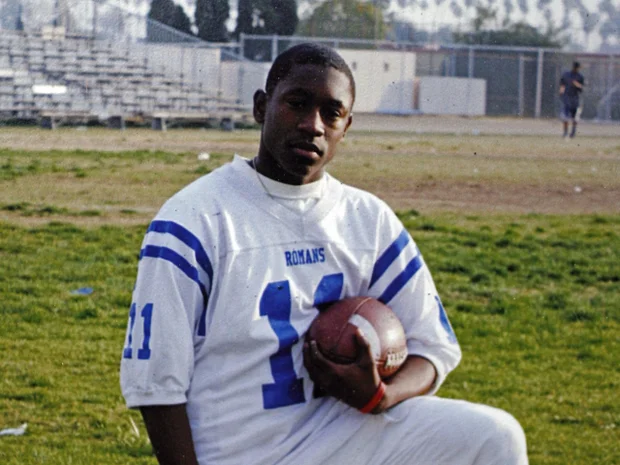
Seventeen-year-old Jamiel Shaw II, a standout running back with a promising future, was shot and killed in 2008 just steps away from his home. He was not involved with any gang.
Espinoza, a self-proclaimed gang member, had openly told authorities he was willing to kill for his gang—even if it meant landing on death row.
Jamiel’s parents and friends filled the courtroom, wearing red in honor of “the blood spilled.”
“You don’t have a right to execute someone and then come in and plead not to be executed,” said Jamiel Shaw Sr., the victim’s father.
He described how he devoted his life to preparing his son for a successful athletic career.
“We really thought we had a chance,” he said. “My son was groomed to succeed.”
Jamiel’s mother, Anita Shaw, a U.S. Army sergeant, was serving her second tour of duty in Iraq when she received the devastating news.
“I lost it,” she said, recalling the moment her commander told her about her son’s murder.
Though she invoked scripture and the idea of forgiveness, she admitted, “I’m not that strong of a person.”
Espinoza sat motionless throughout the hearing, refusing to look at Shaw’s grieving parents.
Before the shooting, Espinoza had been released from jail on an unrelated charge.
A probation officer had even counseled him, warning about the consequences of further criminal behavior. Despite that warning, Espinoza targeted Shaw without hesitation.
Judge Rose emphasized the cold-blooded nature of the crime and encouraged the family to focus on their younger son, Thomas, who was just 13 at the time and present during sentencing.
“You’re not raising them anymore,” Shaw said after court. “You’re trying to keep them alive.”
The case shook Los Angeles and highlighted the devastating impact of gang violence on families and communities.
Espinoza’s death sentence closes one chapter of the long legal fight, but for Shaw’s family, the pain remains.

