
In basketball, people often judge point guards by flashy stats and highlights, but Brian Seaton, a California native and CEO of Next Level Performance Basketball Academy, says that completely misses what the role is really about.
In his recent Facebook post, Seaton breaks it down plainly, being a point guard isn’t about who handles the ball the most or who hunts for the first shot.
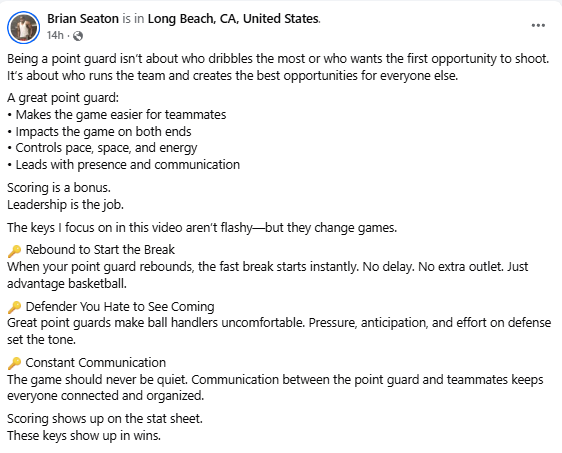
It’s about running the team, creating opportunities for everyone else, and leading in ways that wins are built on, often without ever appearing in the box score.
Seaton puts it best: “Scoring is a bonus. Leadership is the job.” The key idea here is that a point guard’s true value goes far beyond the stat sheet.
Those numbers look impressive, but they don’t show the quiet, game-changing work that separates good point guards from truly great ones.
A great point guard makes the game easier for their teammates. They read the floor like a book, deliver precise passes, create spacing, and make smart decisions that put others in position to succeed.
Instead of forcing their own shot, they prioritize team flow. This selfless approach turns average players into threats and elevates the entire offense.
But their impact doesn’t stop on the offensive end. Elite point guards affect both sides of the court.
They control the pace, speeding things up when the team needs energy or slowing it down to regain composure.
They manage space, directing movement and positioning. And they set the energy level, bringing intensity that lifts everyone around them.
Leadership is a nonstop, vocal presence that organizes the team, builds trust, and keeps everyone sharp.
Seaton highlights a few specific, non-flashy keys from his video that truly shift games:
Rebound to Start the Break
When the point guard grabs the defensive rebound, the break starts instantly, creating a quick numbers advantage and easy transition points, making guard rebounding a key weapon in today’s fast-paced game.
Defender You Hate to See Coming
Great point guards aren’t just passers, they’re relentless on-ball defenders. They pressure ball handlers, disrupt dribbles, contest shots, and force turnovers, setting a defensive tone that makes opponents uncomfortable from the opening tip.
These intangibles, leadership, hustle, rebounding, defense, and talking on the floor, don’t show up in points or assists, but they win games.
Players like John Stockton, Jason Kidd, Gary Payton, Chris Paul, and Jrue Holiday prove it, real point guards lead, defend, and lift their team instead of chasing stats.
Seaton’s message to players, coaches, and fans is simple, stop chasing stats and highlights.
The best point guards aren’t the ones who dominate the ball, they’re the ones who make teammates better, control the game’s pace, and lead with their heart and voice.
That’s the kind of impact that quietly changes games and shows up where it matters most, in wins.
Also Read-: NJ Coach Donny Lang Sometimes Forgets Bilal Is Just 15 Amid Breakout Season

