
Tyronn Lue, a two-time NBA champion with the Lakers, is renowned for coaching the Cavaliers to a historic 2016 comeback title and guiding the Clippers with his calm demeanor and strong player connections.
Yet, behind his success lies a story that shaped by his tough upbringing and the influence of his parents, Ron Lue and Kim Miller.
Born on May 3, 1977, in the small town of Mexico, Missouri, a place named in homage to Texas’ independence from Mexico, with family roots tracing back to the era of slavery in the region.
Lue’s early life was marked by hardship, family struggles, and the kind of community support that he credits for building his unyielding underdog mentality.
Raised primarily by his mother, Kim Miller, in a single-parent household, Lue grew up alongside his brother, Gregory Miller, and his sister, Shakea Lue.
His ancestral background blends African American heritage with Mexican ancestry, reflecting a diverse family tapestry that ties into his American nationality.
Ron Lue, his father, was largely absent during Lue’s formative years, grappling with addiction issues that kept him out of the picture.
As Lue shared in a candid interview,
“My mom being a single parent, you know, having three kids—my sister, older; my brother Greg—and, you know, she was the neighborhood booster. She would go on the road and she would shoplift and come back and sell stuff at half price in the hood, and that’s how we made our living.”
Via Facebook
Despite the family’s financial struggles, Lue recalls being the “best dressed” kid in school during sixth and seventh grade, a testament to his mother’s resourcefulness and determination to provide for her children, even if it meant bending the rules in a community where survival often demanded tough choices.
The challenges didn’t stop there; Lue’s father battled a crack addiction for much of his son’s life, eventually landing in prison.
Their relationship was strained, but redemption came later. Lue explained,
“He got out when I was playing for Orlando in 2003, and we never had a great relationship, but we kind of had one when he got out. I said, ‘Listen, if you get back on drugs, I’m not dealing with you no more.’ And he’s been clean for, I think, 23 years now—no drink, no drugs. We got a great relationship. Text and call every game.”
This turnaround highlights Lue’s own capacity for forgiveness and boundary-setting, qualities that have undoubtedly shaped his coaching style, where he emphasizes accountability and growth among his players.
Life in Mexico, Missouri, was far from easy, and Lue often found himself navigating trouble as a young boy.
With his mother frequently away on “business” trips that lasted up to two weeks, he stayed with his grandparents, who turned in early, leaving him to sneak out and explore the town’s gambling spots and other mischief starting as early as sixth grade.
As he put it,
“Mexico raises you. It’s not really your parents—like, Mexico raises you, the community. So I had a lot of help from a lot of people. That’s why I don’t have a problem giving back.”
The town’s tight-knit yet rough environment instilled in him a street-smart toughness, but it also led to some scrapes with the law.
To steer him straight, Lue moved to Kansas City during his sophomore year of high school to live with his uncle, Kevin Graves, who became a pivotal father figure.
Graves taught him discipline and life skills that Lue says were crucial in redirecting his path.
From there, Lue attended Raytown High School, where his basketball talents began to shine, setting the stage for his college career at the University of Nebraska and eventual NBA draft by the Denver Nuggets in 1998.
Read More-: He Traveled That Ball All the Way From Africa’: Racist Taunt at Wayne County Middle School Basketball Game
Kim Miller’s influence looms large in Lue’s narrative of perseverance.
As a single mother hustling to keep the family afloat, she embodied the sacrifices that Lue now honors through his success.
He attributes his discipline, mental fortitude, and relentless drive to the hardships they endured together, noting how they fueled his underdog spirit on the court and beyond.
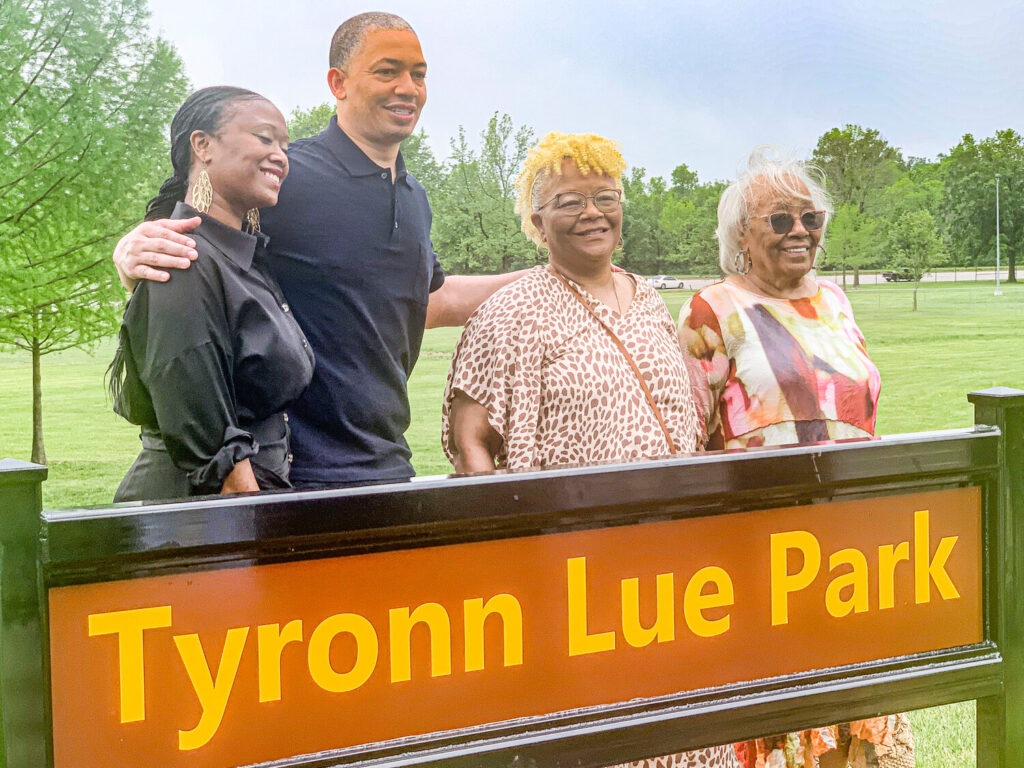
Lue has been profoundly generous in return, ensuring that his mother and grandmother haven’t had to work since he was drafted.
He told podcast hosts.
“When I got drafted, my mom and grandma—they ain’t worked another day in their life, They’ve been getting a check for 25 years, every month. That was a blessing for me to be able to take care of them and to see where we come from and all the struggles we had of being poor.”
Via afrotech
Even when his financial advisor cautioned him about sending too much money home, Lue stood firm:
“I said, ‘Man, I’d rather be broke. I don’t want to be rich and my family be broke. I’d rather be broke as long as they’re successful and as long as they’re happy, then I’m okay.’ They did a lot raising me. If you just see all the things they did for me to get to this point. I owe them everything. I’ve made a lot of money. I’m secure with my money. I don’t have any kids, so it goes to my family.”
Today, as Lue continues to guide the Clippers with the same adaptability and poise that defined his playing days, famously stepping over Allen Iverson in the 2001 Finals or orchestrating comebacks as a coach, his story remains a powerful reminder of how family, even in its imperfections, can lay the foundation for greatness.
Tyronn Lue’s parents, through their struggles and eventual reconciliations, didn’t just raise a basketball star; they shaped a man who values loyalty, resilience, and giving back above all.
In a league full of high-profile figures, Lue’s grounded perspective, rooted in his Missouri origins, sets him apart as both a leader and a son who never forgets where he came from.

